The Invasion of Iraq: A Moral and Just War?
There are, of course, many ethical issues present when discussing the U.S. invasion of Iraq. Over the next four blog posts I will be breaking down four main ethical issues that come to mind when putting this into a Christian context. These ethical issues include:
1) Just War Theory
2) The humanitarian issues involved with war tactic
3) Separation of Church and State
4) Imperialist Mode of Living/ Overconsumption and its impact on Iraqi citizens
In this first post I will be discussing the Just War Theory and trying to break down if this invasion is actually justifiable or not.
In our course, we have been able to discuss Just War Theory and have debated whether one can morally go to war as a Christian. In fact, in our reading by David D. Corey titled The Christian Just-War Tradition, Corey mentions the war in Iraq in his very first sentence on page one.

An Introduction to Just War Theory
The just war tradition is rooted in Christian thinkers such as Augustine, Martin Luther and John Calvin. It looks at some wars as necessary to defend an evil and identifies three main criteria needed to truly define it at ethical: 1) legitimate sovereign 2) a just cause and 3) right intention.
After the war on terrorism began in 2001, a new debate between Christian realism and Christian pacifism has arisen, based on these ideals.
Corey holds that Christian just-war tradition is neither entirely realist nor entirely pacifist. He states that this theory holds that sometimes, under the right conditions, war can be seen as just.
I will not be aiming to disprove just war-theory as it can be applicable; take Ukraine's fight back against the recent Russian invasion as an example. An overwhelming humanitarian crisis is occurring there and Ukraine is justified in fighting back against their invaders.
This same ideal, however, is not applicable to the United States' invasion of Iraq.
The Iraq Resolution: Just?
As stated by Riverbend, and as backed up in her first-hand accounts, quotes and descriptions, the invasion of Iraq by the United States cannot be considered as just war. The American presence in Iraq has long been a questionable one. After the terrorist attacks of 9/11 in New York City, George W. Bush ordered American troops to invade Iraq under the Iraq Resolution in order to remove weapons of mass destruction, bring an end to Saddam Hussein and “free the Iraqi people.”
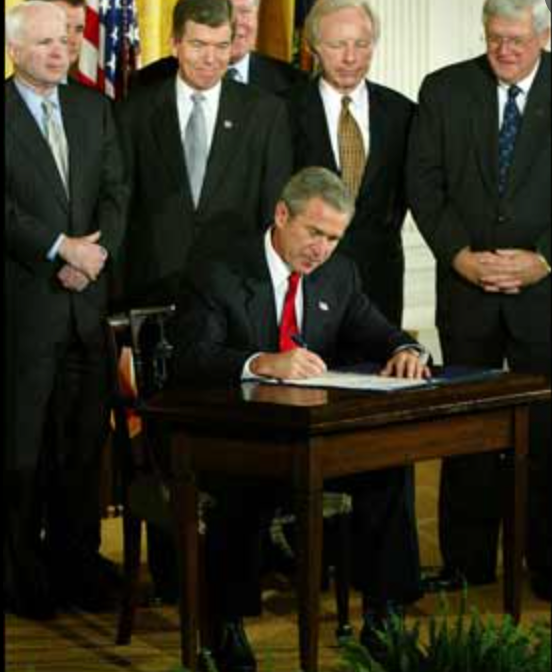
However, much contention has come into play since this decision was made as there were never any weapons of mass destruction actually found in Iraq and no direct link between the 9/11 attacks and the country of Iraq.
While the invasion was incited with the rhetoric of “justice” for both the American people and the Iraqi people, it is clear from Riverbend’s accounts and experiences that this war was not carried out in a just manner.
This is incredibly relevant when we look at George W. Bush. He is one of few recent presidents who espouses his faith and stays vocal about its impact on his decision making. In speaking about the invasion of Iraq, he spoke often of religious justification for it. Michael Waldman, one of Bill Clinton’s most famous speechwriters stated that, "For President Bush, the Scripture quotation and the religious language is not a grace note but often the guts of the argument.” Bush, therefore, saw this invasion as a just and moral war through the lens of his faith.
A Breakdown of this Decision
Corey begins his breakdown of just war tradition by stating that love is “the first principle of all Christian ethics, and the duty to love is indeed absolute.” How is this war justified if Riverbend and her family, as only one example, spend their days and nights fighting for access to basic human necessities at the expense of another country’s weaponry?

An Act of Love? Following Governing Authority?
Followers of the just-war tradition, furthermore, believe that love does not mean non-resistance. They believe, as Augustine stated, that resistance and force can sometimes be seen as an act of love. Corey states that, “We do things we wish we had not done, and in some cases would be grateful to encounter resistance from loving parents, friends, or even strangers. Does scripture rule out the possibility of such love-directed force? Far from ruling it out, the gospel supplies an example of it, and this is the example of Christ and the money changers,” (125).
Secondly, Corey states that scripture, specifically Romans 13, asks Christians to "be subject to the governing authorities" and serve God by executing wrath on those doing wrong. However, he does point out that we also must raise questions about this governing authority's legitimacy. It should, ultimately, be driven by one's calling to love God and neighbor. He states that this, however, may call upon someone to use force against another.
However, we as a nation, are not necessarily responsible for being the “parents” of other nations. Yes, it is honorable to want to protect and fight back against the injustice of Islamic extremism. However, the innocent civilians living in Iraq are not the evil that our country was trying to resist but they are the people who received a majority of the consequences of war. Our methods of bombing cities and invading neighborhoods was not a productive or moral route to justice. In fact, it was masquerading our ideals as a justification for killing innocent, God-given lives.
To Turn the Other Cheek?
Another incredibly interesting point that is then brought up is the turning of the other cheek. When we see a man, such as one being robbed by thieves, being attacked, do we fight back for him or do we turn the other cheek? Just War supporters would argue that being a loving Christian would require them to help. Corey states, "While the duty to love, then, is always absolute, the injunctions to turn the other cheek and to resist not one who is evil are not absolute, but must be applied judiciously according to the more fundamental requirements of love." (126). To this, I fully agree. It is up to one's judgement in these situations to stand up for another human being attacked. Our, in that moment, more abled status to help someone should be prioritized in the saving of another human.
This argument, Bush thought, applied to the U.S. invasion of Iraq. Bush stated, in 2001 before a joint session of Congress that, "Our war on terror begins with al Qaeda, but it does not end there. It will not end until every terrorist group of global reach has been found, stopped, and defeated," (Miller Center). It is clear that Bush's potential stated intent was to save the people of these nations from the reign of militant groups.
However, as previously stated, our methods of attack and invasion were not necessarily using our power for good. Instead, we used our upper hand access to military weapons as a way to suppress and kill civilians in the name of freedom.

Thomas Aquinas' "Three Necessary Things" for Just War
This is further proven when we look at Aquinas's three criteria for a just war:
1) Authority of a legitimate sovereign
He states that it is never justifiable for a war to begin without the approval of a sovereign ruler. The invasion of Iraq had this approval in Bush.
2) A "just cause" is required
The Christian "presumption against war" ethic may be overcome if a just cause arises. While, like I stated earlier, a "just cause" in wanting to overcome militant extremists is present, that does not automatically mean that the execution of this cause was just.
3) Right intention
This cause of war must be motivated by love of neighbor. This is another realm in which our invasion's justness can be debated. Was our intention truly to aid Iraq and protect the American people or was it to prove American dominance?
"Without the other two criteria, 'right intention' would be inadequate, for every conqueror intends peace-- on his own terms. But without the criterion of right intention, the prosecution even of a just cause might consume a Christian soul in sin and injustice" (Corey 128).
In conclusion, George W. Bush, through his Christian faith, saw the invasion of Iraq as justifiable when looking through the lens of Just War Theory. However, through Riverbend's first hand accounts and narrative of her life under attack, it is clear that this invasion, through execution and practice, was not justified. While Bush's cause was seen by some as just, his intention, can be seen as simply reaching for the goal of proving American dominance at the expense of innocent civilians.


Comments